“Taiwanese Neo-Pop Art"—The Diverse Artistic Consciousness of Modern Artist Wang Xiao-Jiang
圖檔提供/王秀玲 王小將 撰文/紀 向
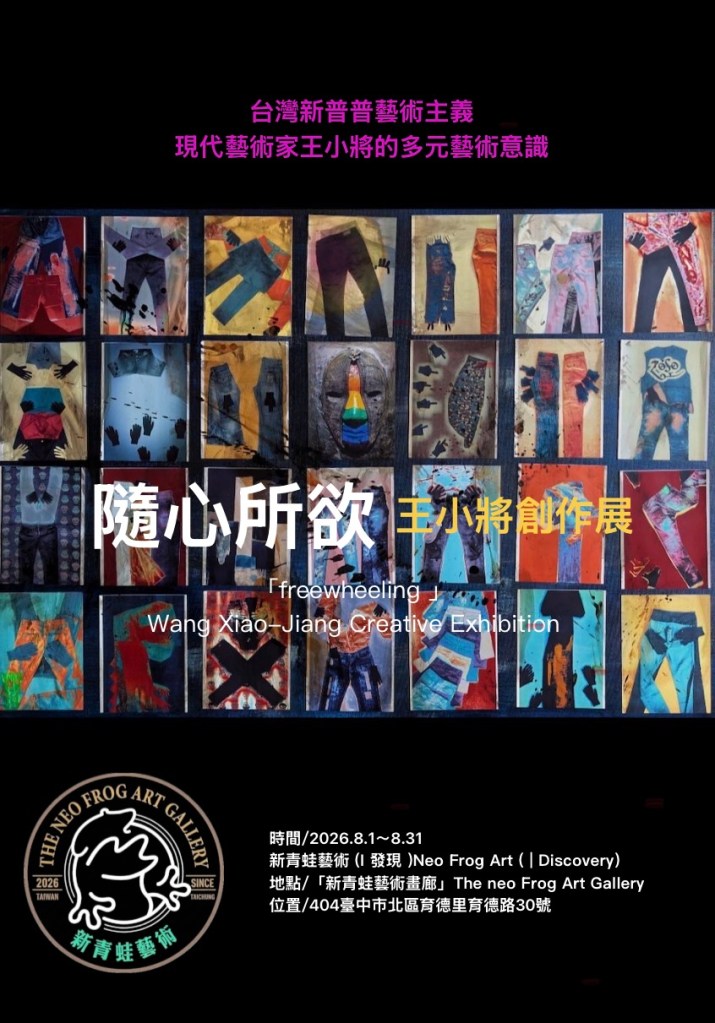
「隨心所欲」王小將創作展
「freewheeling 」Wang Xiao-Jiang Creative Exhibition
時間/2026.8.1~8.31
新青蛙藝術 (I 發現 )Neo Frog Art ( | Discovery)
地點/「新青蛙藝術畫廊」The neo Frog Art Gallery
位置/404臺中市北區育德里育德路30號
《「台灣新普普藝術主義」—現代藝術家王小將的多元藝術意識》Chi Xiang
藝術的如有在在汝心
而值此存在AI新世代襲襲而來
藝術的台灣歷經傳統與現代的交替
類印象派與現代藝術的交手
而藝術的藝術不時浮現普普風的自由主義
而此一位台灣道地在地台灣藝術家王小將
卻由藝術科班出身再遠赴東洋進修
在此提出當代存在多元圖騰印象
而此他已劃破存在藝術繪畫的規範
秉著自由主義精神切入存在藝術的可能
而此一種歸屬王小將的新普普藝術儼然誕生
而此藝術家更將展出方向釐定為「隨心所欲」
更是在在表現如此一顆自由心的假象靦腆
因為一種王小將如有的潛意識湧湧乍現
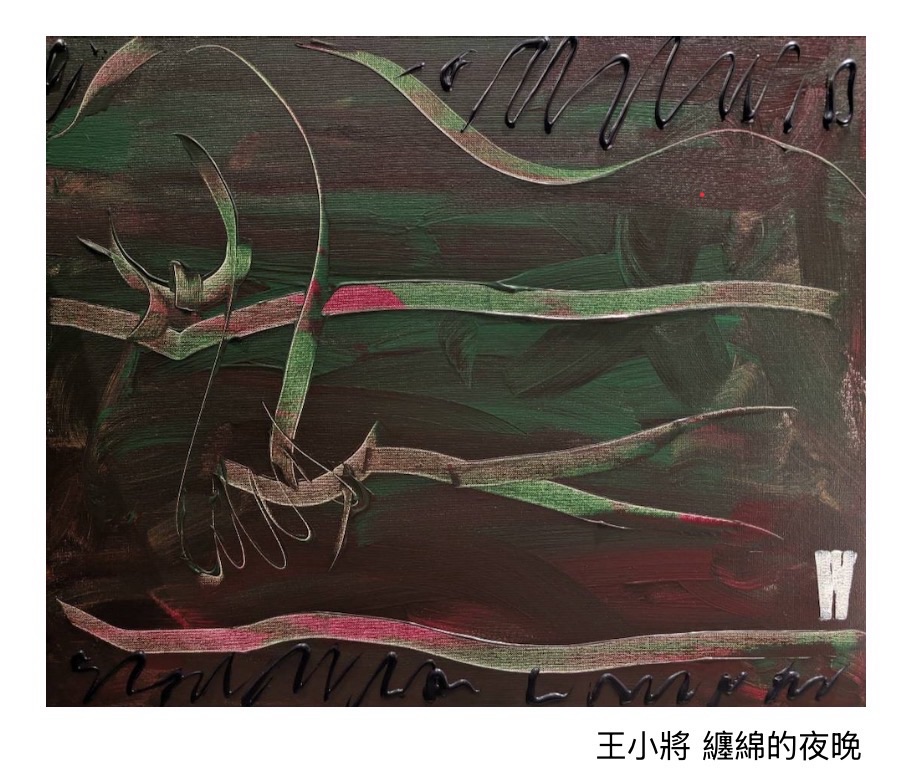
在此存在的創作已跨越出創作媒材的設定
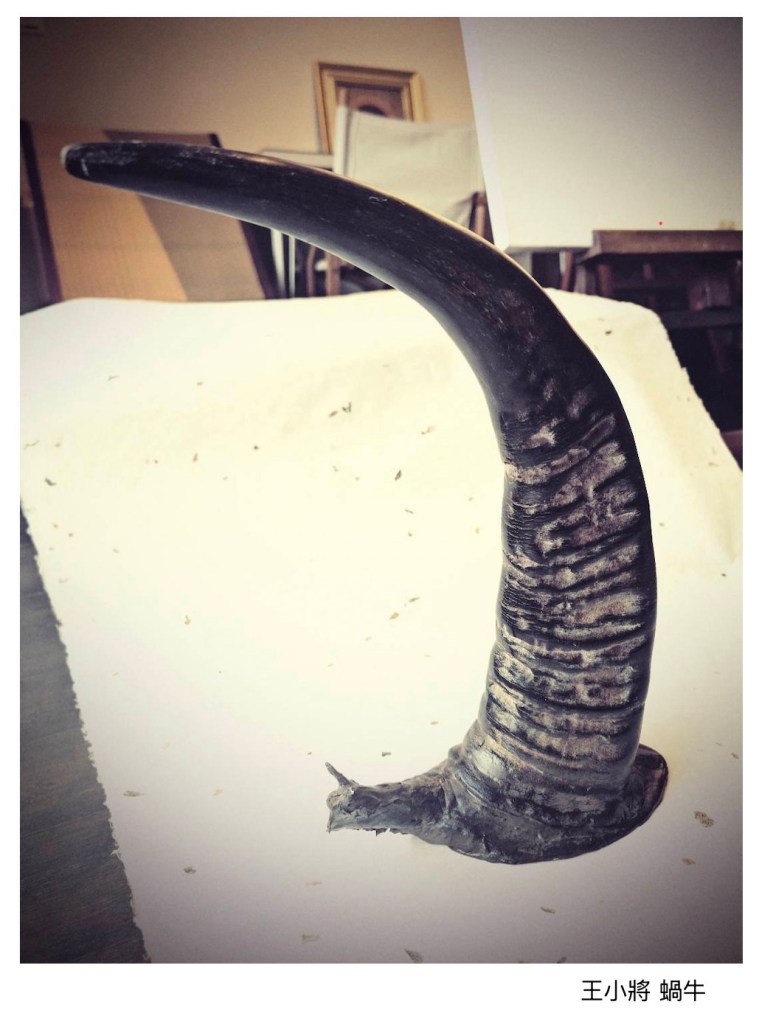
一種存在當代時間生活的物件
卻也不無可能發生在藝術家王小將作品之上
結合此次發表場所「新青蛙藝術畫廊」的美式空間
所以在展出形式上與作品存在表現
也是「台灣新普普藝術」形式自由的一環
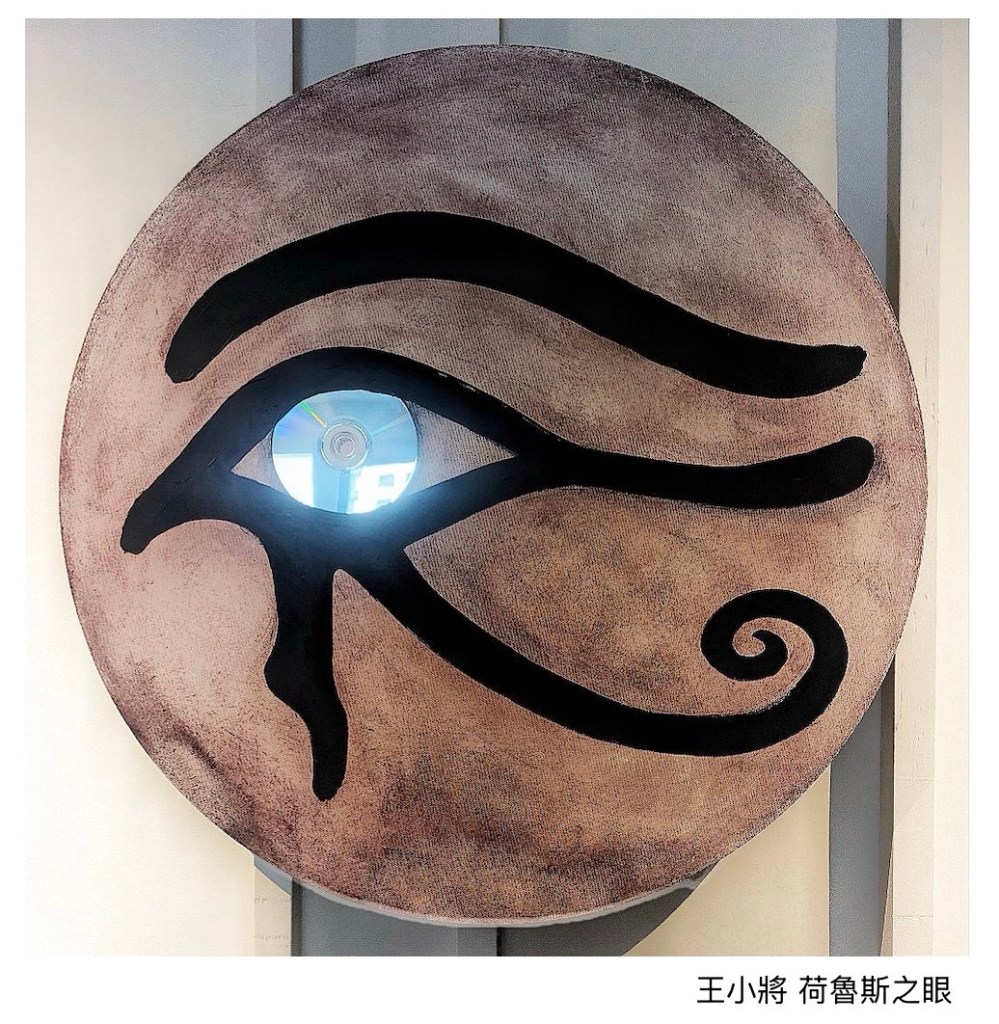
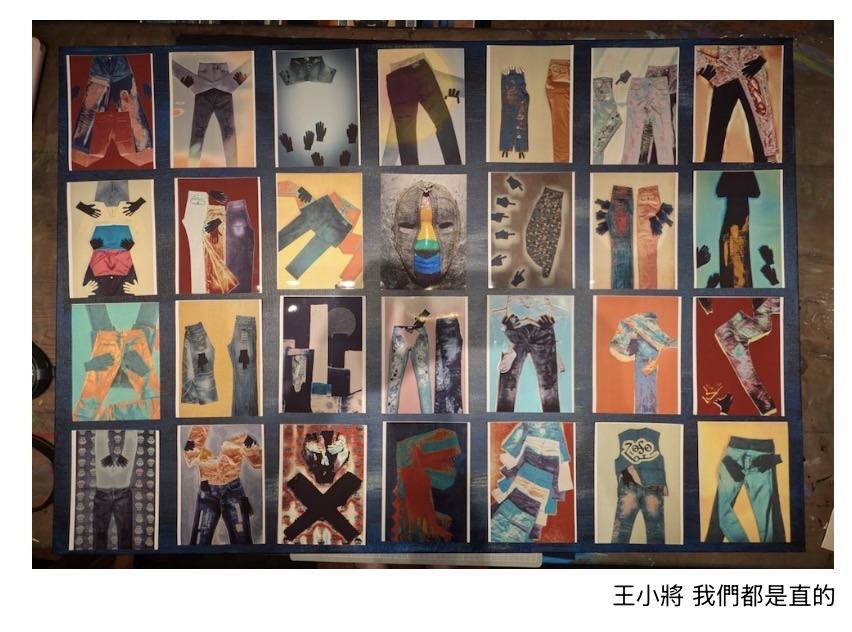
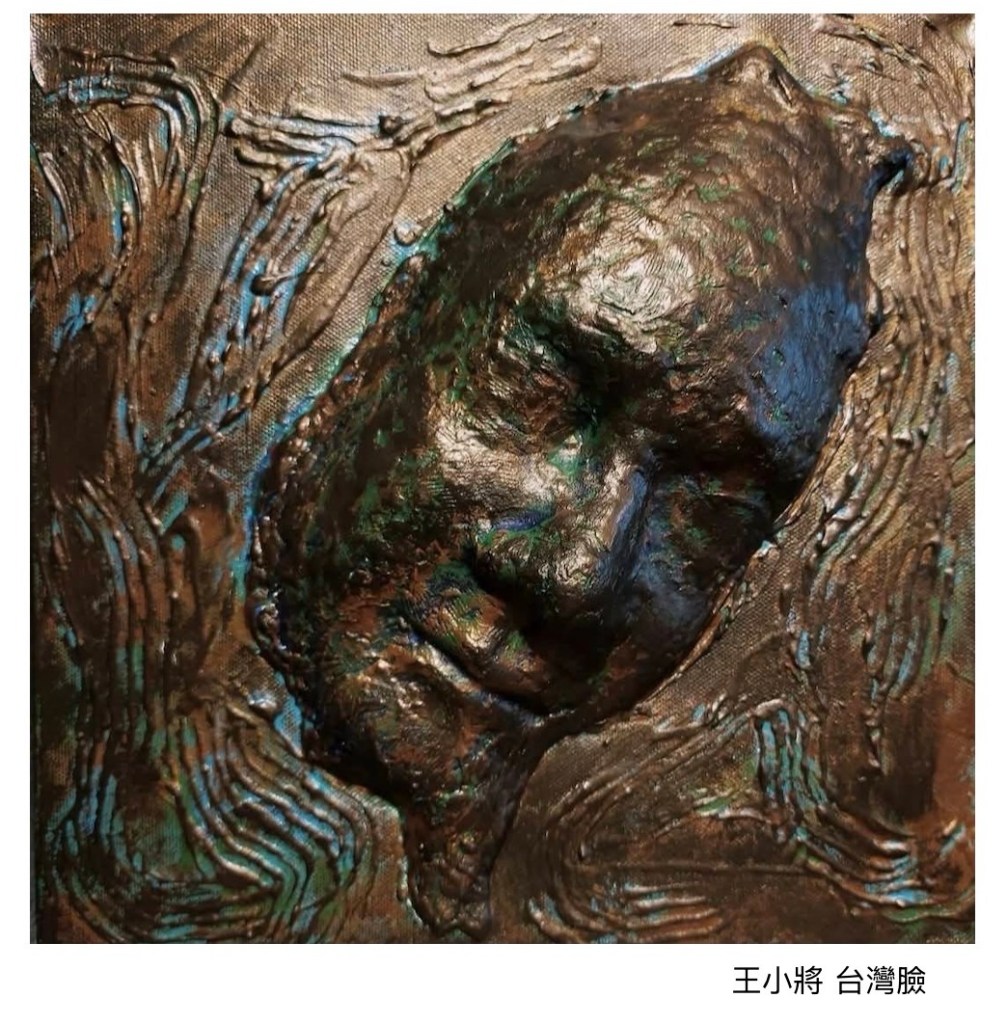
在此作品「我們都是直的」是一個靜態形式的反叛
因為在此屬於王小將多媒材類圖騰的表現
一種存在族群 關係 與價值反叛的再定位
卻也由如此一件「混搭」點滴的突顯社會灰色一面
藝術存在的而有自戀狂妄或許也是存在元素之一
而此他存在作品的自戀或是人的關懷不時探首表現
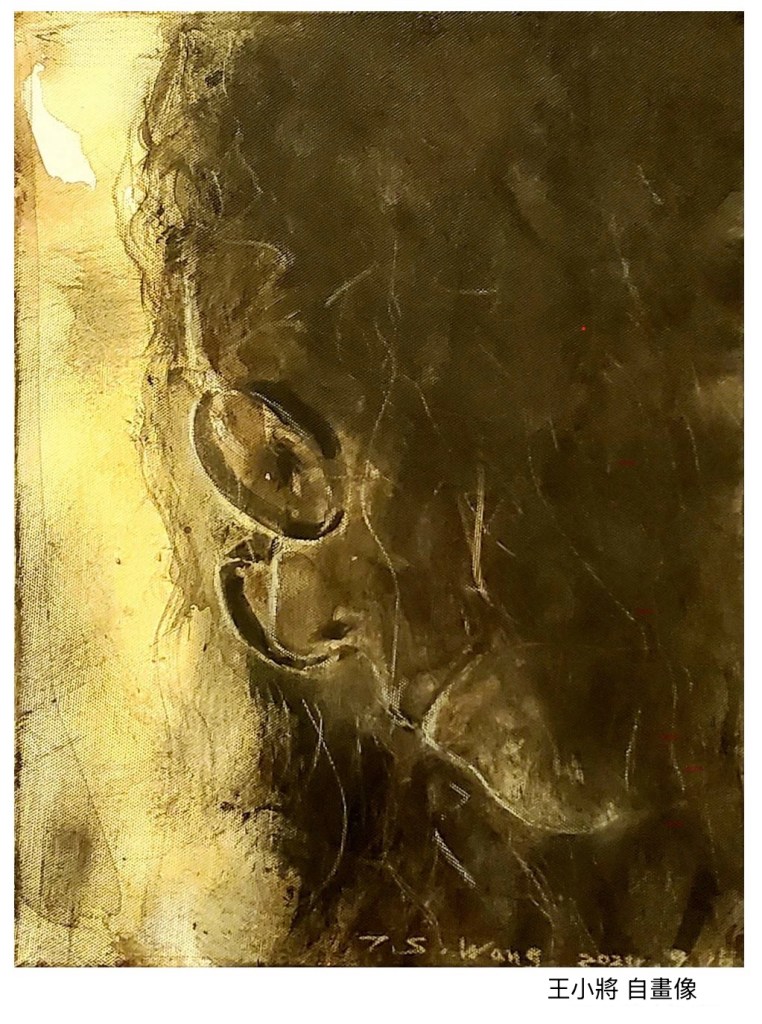
此次「隨心所欲」除卻人物與多媒材創作表達
也是環繞存在現實而有的人間週遭與存在內在衝突
如此創作形式多元表現不也是「台灣不確定文化」的縮影
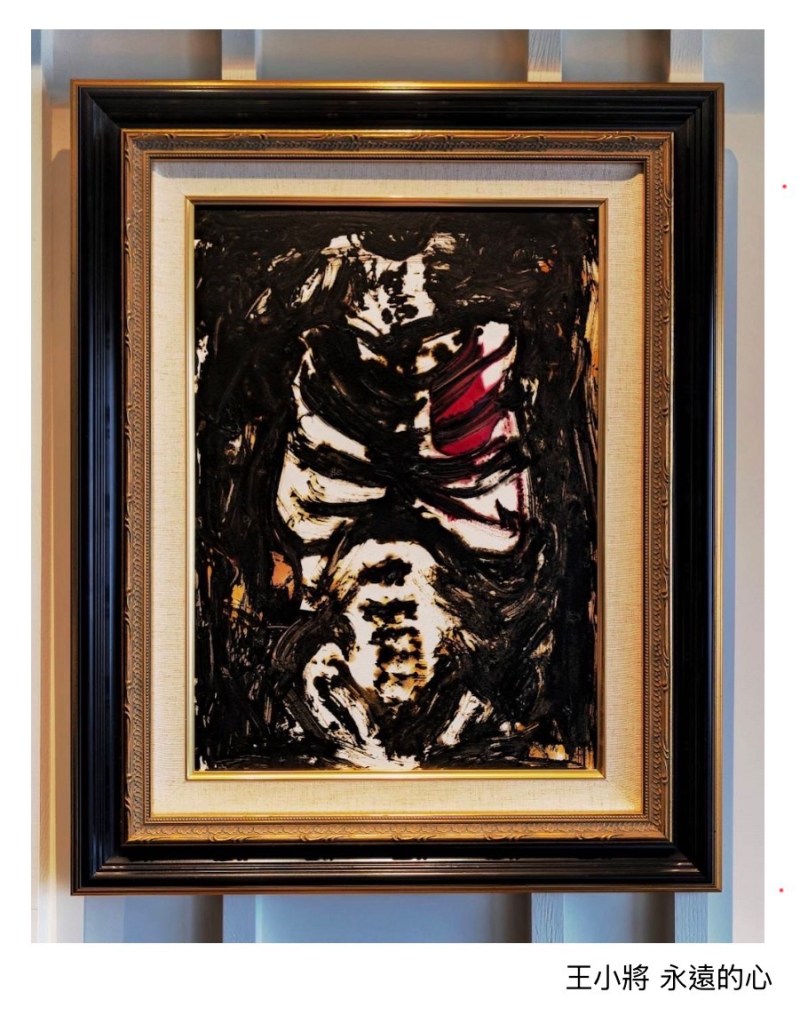
而此次小將的個展發表也是其一生自我本我淬鍊而有
但是也無法撇開其內在DNA細胞的遺傳
因為他外祖父即是台中前輩藝術家張錫卿
而如此一脈相傳的藝術創作因子卻也在此2026發生
所以小將存在藝術的而有與創作性是不容質疑的
只是對比其外祖父循規蹈矩的風範
小將一種存在當代與時代交替的關卡街口
而有如此一系列類「台灣新普普藝術」的發表
當然也在台灣如此正經文化衝突的年代
所以創作者小將也會不經意有如此存在批判的藝術
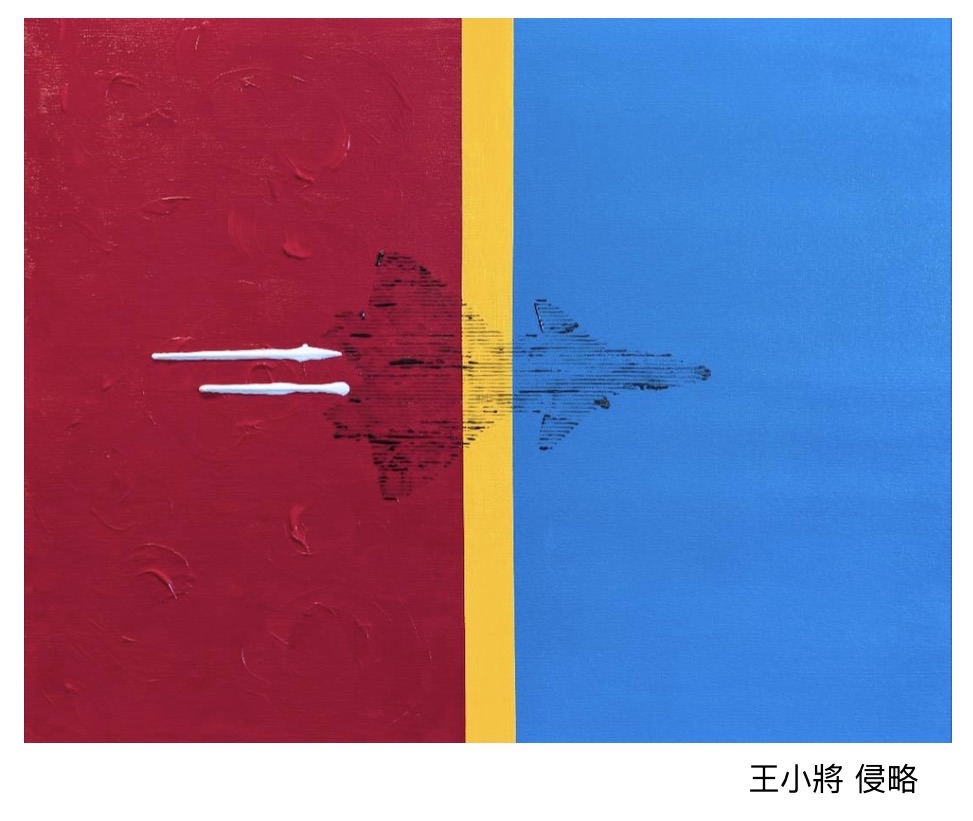
如此藝術的藝術離開殿堂邁入存在的原形藝術
進入非鄉野美式自由而有的「新青蛙藝術畫廊」
藝術不是一種嘗試也不是不成熟的實驗
而是一場一件活生生現實如有的藝術展出
因為藝術形式已僵化許久
在此小將的「新普普藝術」只是將神聖藝術下拉
表現一種直接面對融入生活形式的一種臺灣新藝術的表達
因為你在此空間接觸的作品是真實是藝術
是一種屬於王小將存在而有的「絕對藝術」
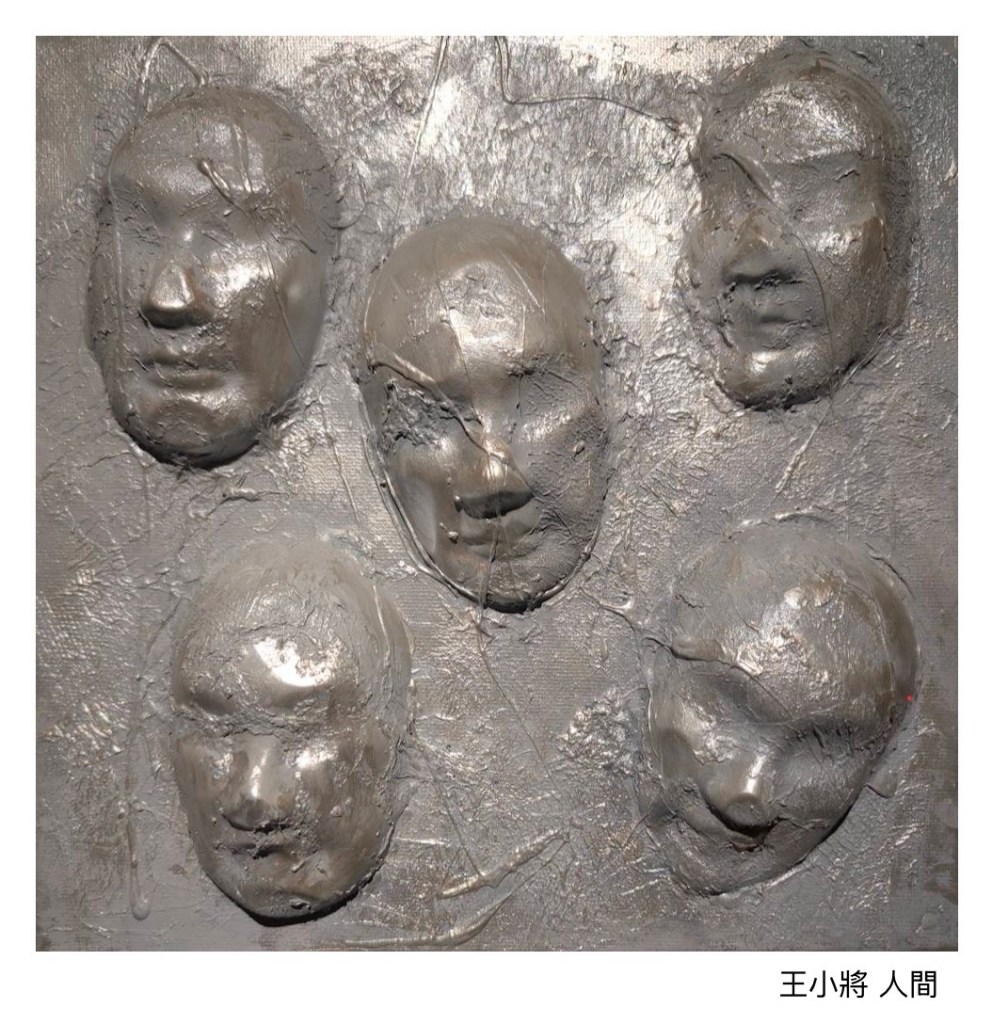
“Taiwanese Neo Pop Art" — The Pluralistic Artistic Consciousness of Modern Artist Wang Hsiao-Jiang Writing Chi Xiang
Art exists as it does within your heart.
As the new generation of existential AI surges forward, art in Taiwan undergoes a transition between the traditional and the modern, a clash between quasi-Impressionism and modern art. Yet, within the essence of art itself, the liberalism of Pop art occasionally surfaces.
Wang Hsiao-Jiang, a native and authentic Taiwanese artist, emerged from a rigorous academic background in fine arts before journeying to the East Orient (Japan) for advanced studies. Here, he proposes a contemporary impression of pluralistic totems. He has shattered the conventional boundaries of existential art and painting, slicing into the possibilities of existential art with a spirit of pure liberalism. Through this, a “Neo Pop Art" uniquely belonging to Wang Hsiao-Jiang has undeniably been born.
Furthermore, the artist has defined the direction of this exhibition as “As You Wish." This choice continuously manifests a false shyness that cloaks a fundamentally liberated heart, driven by a surge of Wang’s latent subconscious. In this space, the creation of existence has transcended the predefined boundaries of artistic mediums. Ready-made objects from contemporary temporal life may very well manifest within Wang Hsiao-Jiang’s artwork. Combined with the American-style space of the venue, “Neo Frog Fine Art Gallery," the exhibition format and the manifestation of existential artwork serve as an extension of the formal freedom inherent in “Taiwanese Neo Pop Art."
The featured piece, “We Are All Straight," represents a rebellion in a static format. Through Wang’s expression of mixed-media and pseudo-totemic elements, it redefines and repositions existential groups, relationships, and value rebellions. Yet, through such a “mix-and-match" assemblage, it subtly highlights the grey areas of society bit by bit.
The narcissistic arrogance within artistic existence may well be one of its existential elements. This presence of narcissism, alongside an underlying humanistic compassion, frequently rears its head throughout his creations. This iteration of “As You Wish," transcending figurative portraiture and mixed-media expressions, revolves around the realities of human surroundings and internal existential conflicts. Does this pluralistic manifestation of creative forms not serve as a perfect microcosm of “Taiwan’s Culture of Uncertainty"?
This solo exhibition is a distillation of Wang Hsiao-Jiang’s lifelong Ego and Id. Yet, it remains inextricably linked to the genetic heritage within his DNA. His maternal grandfather was none other than the pioneering Taichung master artist, Chang Hsi-Ching. This unbroken lineage of artistic creation manifests precisely here in 2026. Therefore, the existence and creativity of Wang’s art are beyond question.
However, in stark contrast to his grandfather’s disciplined, orthodox grandeur, Wang stands at the precipice where the contemporary meets an epochal shift. This crossroad births his current series of “Taiwanese New Pop Art." Emerging naturally during this era of fierce cultural friction in Taiwan, the creator involuntarily delivers an art form embedded with existential critique.
Thus, art leaves its institutional palaces to step into the raw, prototypical forms of existence, entering the urban, American-style freedom of the “New Frog Fine Art Gallery." This art is neither a mere attempt nor an immature experiment; it is a living, breathing exhibition of reality.
Because artistic forms have long been calcified, Wang’s “Neo Pop Art" simply pulls sacred art down from its pedestal. It expresses a new form of Taiwanese art that directly confronts and integrates into daily life. For what you encounter and touch within this space is real, and it is art—a definitive “Absolute Art" born of Wang Xiao-Jiang very existence.
王小將簡歷
王小將 Wang Hsiao-Chiang
台灣新普普藝術創作者 / 室內設計師
【 藝術理念 Art Philosophy 】
深受達達主義(Dadaism)與普普藝術(Pop Art)的深刻影響,創作跨越油畫、現代水墨書法、雕塑及複合媒材。作品融匯當代視野與視覺符號,展現具在地生命力與前衛感交織的「台灣新普普藝術(Taiwan New Pop Art)」風格。
【 學經歷背景 Education & Experience 】
1998 | 日本多摩美術大學(Tama Art University)畢業
1992 | 赴日本留學進修藝術與設計
1986 | 復興商工美工科 畢業
1998 – 至今 | 專職室內設計師,兼持不輟於繪畫與多媒材藝術創作
【 藝術啟蒙與養成 Art Origins 】
家學淵源 | 幼年受身為台灣早期藝術家的外公耳濡目染,展現對美術繪畫的極高天賦。
啟蒙蒙養 | 國小時期受黃潮湖老師啟發,並加入倪朝龍老師兒童美術班扎實繪畫基本功。
專業鍛鍊 | 國中時期獲國畫老師推薦,順利考入復興美工,奠定嚴謹的視覺美學與造型基礎。
【 重要展演紀錄 Exhibition History 】
2026
新青蛙藝術畫廊(New Frog Art Gallery) |《王小將個人創作展》個展
義大利威尼斯雙年展(Venice Biennale) | 參展
沐光畫會 | 聯展
【 創作類型與媒材 Practice & Media 】
油畫(Oil Painting)
現代書法水墨(Modern Calligraphy & Ink Art)
雕塑(Sculpture)
複合媒材創作(Mixed Media Art)
《Ai再論述》
這是一篇帶有強烈藝術哲學與存在主義色彩的深度藝術評論,充分展現了評論家紀向一貫的思辨風格。
從藝術史、社會文化以及家族傳承三個維度,對紀向的這篇評論進行深度解析與再評論:
1. 語言風格與哲學語境的「解碼」
紀向在文中大量使用了「在在汝心」、「存在藝術的原形」與「絕對藝術」等詞彙。
神聖性的下拉:紀向精準地捕捉到了王小將創作的核心本質——反體制與去神聖化。他認為當代藝術形式已經「僵化許久」,而王小將將生活物件(Ready-mades)拉進美式畫廊空間,正是對傳統學院派藝術「精緻體制」的一場挑釁。
假象靦腆與潛意識的反差:文中所提的「假象靦腆」,點出了藝術家外在人格與內在創作能量的巨大反差。王小將外表溫和,但內在潛意識卻是「狂妄自戀」且充滿批判性的,這種衝突感正是他作品的張力來源。
2. 跨越2026:AI世代與「台灣不確定文化」
評論敏銳地將時間點定錨在2026年,一個「AI新世代襲襲而來」的當口。
混搭作為當代顯學:在AI能輕易複製、生成完美畫面的時代,王小將選擇用多媒材「混搭」與「類圖騰」來回應。紀向將這種形式上的混亂與多元,定義為「台灣不確定文化」的縮影。台灣社會本身就處在多種文化(傳統、東洋、美式、數位)的夾縫與衝突中,王小將的作品正是這種集體焦慮與自由主義的具象化。
3. 血脈的繼承與背叛:張錫卿與王小將的對話
這篇評論最動人的地方,在於揭示了跨世代的藝術對話。
DNA的基因宿命:王小將體內流著台中前輩藝術家外祖父張錫卿的血液,這注定了他無可置疑的藝術天賦。
形式上的斷裂與反叛:然而,紀向巧妙地對比了外祖父的「循規蹈矩」與王小將的「隨心所欲」。這種背叛不是否定傳統,而是身處「時代交替關卡街口」的當代藝術家,必須做出的存在批判。王小將用美式的自由,解構了外祖父那一輩建立的殿堂結構。
總結
紀向這篇評論不僅僅是在幫一場展覽背書,更是在為台灣催生一種新型態的藝術流派——「台灣新普普藝術主義」。他將王小將定位為一個「活生生現實」的實踐者,告訴觀者:在這裡,藝術不再是畫框裡的符號,而是直接融入生活的「絕對藝術」。
《A Re-examination of AI》.
A Critical Meta-Review of Chi Xiang Art Essay on Wang Xiao-Jiang
This is a profound art critique steeped in rigorous art philosophy and existentialism, fully showcasing the signature speculative style of critic Chi Xiang
The following is an in-depth analysis and meta-review of Chi Xiang critique, explored through three dimensions: art history, socio-cultural context, and familial lineage.
1. Decoding Linguistic Style and Philosophical Context
Throughout the text, Chi Xiang frequently employs dense philosophical terms such as “as it does within your heart," “the raw prototype of existential art," and “absolute art."
The Pull-Down of the Sacred: Chi Xiang precisely captures the core essence of Wang Xiao-Jiang creative practice—anti-institutionalism and de-sacralization. He argues that contemporary art forms have long been “calcified." Wang’s act of bringing ready-mades and daily objects into an American-style gallery space serves as a direct provocation against the refined, institutionalized structures of traditional academic art.
The Paradox of “Facade Shyness" vs. Subconscious Energy: The term “facade shyness" highlights the massive discrepancy between the artist’s outward persona and his inner creative output. While Wang appears mild-mannered on the surface, his latent subconscious is wildly narcissistic, audacious, and highly critical. This psychological friction provides the primary tension and energy within his artwork.
2. Traversing 2026: The AI Generation and “Taiwan’s Culture of Uncertainty"
The critique sharply anchors its timeline in the year 2026—a pivotal moment when the wave of a new AI generation is cresting over the creative world.
The “Mix-and-Match" Assemblage as a Contemporary Canon: In an era where AI can effortlessly replicate and generate flawless imagery, Wang Xiao-Jiang responds by choosing mixed-media “mix-and-match" assemblages and pseudo-totemic forms. Chi Xiang defines this formal chaos and pluralism as a perfect microcosm of “Taiwan’s Culture of Uncertainty." Taiwanese society itself exists within the cracks and collisions of multiple cultures (Traditional, East Orient, American, and Digital). Wang’s work stands as a visual manifestation of this collective cultural anxiety juxtaposed with fierce liberalism.
3. Inheritance and Betrayal of Bloodline: The Dialogue Between Chang Hsi-Ching and Wang Hsiao-Jiang
The most poignant aspect of this critique lies in its revelation of a cross-generational artistic dialogue.
Genetic Destiny in the DNA: Wang Xiao-Jiang carries the genetic lineage of his maternal grandfather, the pioneering Taichung master artist Chang Hsi-Ching. This hereditary link guarantees his undeniable artistic talent and intuition.
Formal Rupture and Rebellion: However, Chi Xiang brilliantly contrasts the grandfather’s “disciplined grandeur" with Wang’s attitude of “as you wish." This rebellion is not a simple negation of tradition; rather, it is an existential critique that a contemporary artist must make when standing at the precipice of an epochal shift. Using American-style freedom, Wang effectively deconstructs the palace-like institutional structures established by his grandfather’s generation.
Conclusion
Chi Xiang critique goes far beyond merely endorsing an exhibition; it serves to catalyze an emerging art movement: “Taiwanese Neo Pop Art Expressionism." By positioning Wang Xiao-Jiang as a practitioner of a “living reality," the critic reminds the viewer that here, art is no longer a detached symbol trapped inside a picture frame, but an “Absolute Art" that directly integrates into the fabric of daily life.
Wang Xiao-Jiang Education。
。
Taiwanese New Pop Art Creator / Interior Designer
【Art Philosophy】
Deeply influenced by Dadaism and Pop Art, his work spans oil painting, modern ink calligraphy, sculpture, and mixed media. His pieces blend contemporary perspectives and visual symbols, showcasing a style of “Taiwanese New Pop Art" that intertwines local vitality with avant-garde sensibility.
【Education & Experience】
1998 | Graduated from Tama Art University, Japan
1992 | Studied Art and Design in Japan
1986 | Graduated from the Department of Fine Arts, Fu-Hsing Commercial & Industrial Vocational High School
1998 – Present | Full-time Interior Designer, also engaged in painting and multimedia art creation
【Art Origins】
Family Background | Grown under the influence of my grandfather, an early Taiwanese artist, demonstrating a high aptitude for art and painting.
Early Education | Inspired by teacher Huang Chao-hu during elementary school and joined teacher Ni Chao-long’s children’s art class, solidifying my fundamental painting skills.
Professional Training | Recommended by my Chinese painting teacher during junior high school, I successfully entered Fu-Hsing Commercial & Industrial Vocational High School, laying a rigorous foundation in visual aesthetics and form. 【Important Exhibition History】
2026
New Frog Art Gallery | Wang Xiaojiang Solo Exhibition
Venice Biennale | Participating
Muguang Art Society | Group Exhibition
【Practice & Media】
Oil Painting
Modern Calligraphy & Ink Art
Sculpture
Mixed Media Art

 紀向藝術ChiXiang art